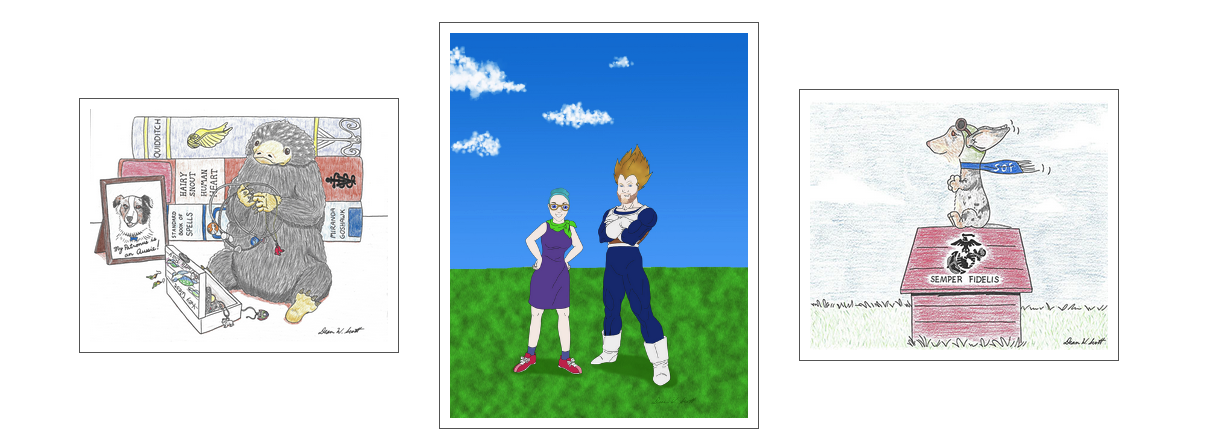
So, this May sees the 20th year since my (and my fellow inmates') escape from UCDavis and it brings with it a moment of sober reflection (unlike my typical drunken reflection). I wanted to just take this time and be mostly serious regarding what I've picked up during the twenty years in this profession (you know, besides the gray hair, stiff joints, and multiple scars) and where FunnyVet.com fits in.
Please check out my dedicated song parody for U.C. Davis, California. Even if you haven't been or are not a current student there, I'm thinking you'll find it probably is still relevant regardless of what university you attend. As a veterinarian, a lot of people come to me and ask about veterinary school and I reply, "I only recommend vet school to people I don't like." I may be speaking for others, but I'm pretty sure that at the time of graduation, if you had asked anyone in my class if they would do it over again, they would probably say yes. However, there might have been a long pause and a thousand-yard-stare involved before that answer was given. Invariably someone will also say, "I've heard vet school is hard to get into." My answer to this is, "Well, yes, but it's even harder to get out." There's the saying "that which does not kill you makes you strong." Well, once you've gotten through vet school, you're strong, trust me. You're like, Hulk-strong. For instance, a couple of years out of vet school I caught the ebola virus.............kicked its ass!
Once I got under the school's barb-wire and past the guard towers and out into the veterinary community proper, I thought I had a vague impression of what a veterinarian is supposed to do and be. I think vet school does a good job of giving you the medicine aspect, the diagnosing, prognosing, and treatment options. You might be thinking, "Of course! That's what it's supposed to do!" Where I find fault, though, is in, for the majority of us going into private practices, they really don't teach or even intimate how to be a veterinarian in the real world. Vet school is in such a rarified atmosphere that reality cannot exist there. So, I'd like to share a few things that, if you've been around long enough, you may already know, but that you certainly weren't told in vet school. You'll find some of my other rules in the veterinary truisms and other scattered places throughout this website. I just wanted to go over some that I haven't touched on elsewhere.
If all of the bloodwork and other diagnostics are completely normal and the pet is still going down-hill, it's cancer. We get taught, besides looking for growths and tumors, to look for changes in bloodwork such as elevated calcium or derangements in the CBC. More often than not, you aren't given these kinds of obvious indicators. This is a tough one because it becomes difficult to prove without pursuing ever higher diagnostics which the owner is often reluctant or unwilling to do. That doesn't mean that it's not true, though.
There is a difference between vomiting and vomited as well as not eating or eating less. Clients are often inexact in their descriptions and we have to pin them down as to what they mean. Sometimes I feel like a prosecuting attorney with a hostile witness on the stand when I'm trying to figure out what's going on with their pet. Strangely, you'll run across some people who get angry about having to answer questions. Any questions.
Online reviews should be ignored and not taken personally. It's nice when you get praised on-line. However, most people go there to vent in an anonymous fashion and say some truly vile and libelous things. Not much you can do about it. Trust me, I've tried. Accuracy is not something these review sites care about. You have to remember, before the internet, people used to talk bad about vets to their friends and neighbors and the like; it's just the vets back then weren't as aware of it happening. If you're feeling down about reviews you've received, pick a classmate that you like or particularly admire and go look at their reviews. I did this with someone I know is one of the nicest people you could meet. He has reviews, that depending on which ones you look at, that paint him as either a saint or the biggest money-grubbing bastard ever. No one is immune. So don't take it to heart.
Six month rule. If a client goes to that 11-level in yelling at you or your staff about your protocols, hours, treatment, charges, explanation, lack of explanation, attitude, body language, etc. and they have been coming to you for less than six months, that is probably just the way they operate and they're not worth trying to keep. And what they are yelling about is probably not legitimate. Now, whenever a problem with a client arises, I always assess the situation and look to see where we could have dropped the ball or done better. However, after 20 years, I have yet to see this rule be wrong. The only exception is if you saw someone for something minor (like rabies vaccine) and they come back for something more substantial years later before showing their true colors.
Yellers. The rule above neatly dovetails into this subject. I had a sales rep tell me once that some people are just yellers. They yell at the grocery clerk, their kids, their neighbors, you. It's a learned behavior. And just like with our pets, I try not to reward negative behaviors. Yellers want to get you to yell back. One recourse I have found is that the calmer you get, the more they ratchet up their anger display. And the thing is, often it is just that. A display. They have learned to act in such a way as to get what they want. You, as the medical professional, have the right to operate in a certain manner and not give in to unreasonable demands. What you'll find is, if you give in, then you have rewarded their bad behavior and just like the biting Chihuahua, your next negative encounter with them will be worse.
If you want to know how often a pet is bathed by an owner, you will have to ask the question twice. This is a weird behavioral quirk I've seen with people. And it's just about a 100% rule. No matter how I ask the question to try to find out the frequency of bathing a pet gets, the owner will tend to answer with something like, "Well, we just bathed him Tuesday." To which I am then obligated (after an internal sigh) to ask the question once again, before they tell me weekly, monthly, or whatever.
Make sure you go to the bathroom before doing a euthanasia. You may think I'm joking (considering the website you're on) but I'm not. If you have ever been caught in a prolonged euthanasia (and that's the thing, you don't know how long they may take), whether due to uncooperativeness of a vein or patient, or just listening to stories or sympathizing with an owner afterwards, this becomes much more difficult when you have a full bladder yelling at you.
People will tend to believe the first person who gets to them. Unfortunately, we are often not the first person who gets to them. So you will, throughout your career, have to battle the internet, the breeder, the minimum-wage pet store clerk, the neighbor, etc. on just about every issue from diet to grooming to necessity of treatment.
Belief system. This connects in part with the last observation. It's important when talking with clients to recognize whether you are just addressing misinformation, a misunderstanding, or if you are up against a client's belief system. Like a person's religious outlook, if a client believes something to be true, you will have no luck in convincing them differently. This applies to vaccines, dietary considerations, spaying/neutering, flea control, heartworm prevention......well, pretty much anything and everything. If you recognize this you can save yourself a lot of time, effort, and frustration. You should still tell them the correct information, just don't get too wrapped up in it if you find yourself metaphorically or literally banging your head against the wall.
The internet is not our friend. Oh, sure. I'm a 21st Century enlightened person. I do the Google, I Spacebook and MyFace. I'm with it. But, the internet is not a friend to the veterinary profession. It is rife with misinformation and half-truths and has any information a client needs to support their belief system about what they think you may be doing wrong. The first problem is that many clients will come into an exam with a pre-diagnosis. They may even be armed with reams of information, because they think, in some way, we need help. And strangely, the majority of the time the pre-diagnosis is invariably diabetes. PU/PD? Diabetes. Limping? Diabetes. Hit by car? Diabetes. So very often you spend more time having to explain why something is not what the client initially thought to finally get around to pursuing the real problem. And a lot of people are put off when you don't support their preconceived opinions. Of course, if it does happen to be diabetes, they will be the ones who came up with the diagnosis, not you. The other part of this is the follow-up critique of your diagnosis and treatment plan via the client's extensive and intensive research on the interwebs. This usually starts with a client pulling out a pen and paper and asking, "How do you spell that?"
Dog food is the most over-thought issue in veterinary medicine. There are hundreds of different dog foods. Everyone has their favorite. Many people are vicious enemies of certain brands. No one seems to recognize that advertising and catering to people's innate ignorances and prejudices drives these trends. Choices on what to feed a dog often falls squarely into a belief system as explained above. Raw food diet people? Good luck getting them to change. Or to understand why their dog continues to have vomiting and diarrhea issues. Make a recommendation for a particular brand? You must be getting a kick-back from that company. Allergies? Must be, has to be food related and don't tell me any different. Any disease the dog might incur? Go on the internet and find out how the dog food you're giving could have caused it. These are only a few of the things you'll address in a typical week. I find it interesting, too, that so much effort is put into choosing and selling dog foods. I do not have the same level of conversation when it comes to cat foods. In fact, I can't remember the last time I had any conversation about what cat food brand someone should feed their cat. Which just goes to underscore a lot of the myths about dog foods out there are manufactured.
Advice by veterinary magazines about communication, business matters, etc. should be taken with a liberal dose of salt. If some advice strikes you as helpful and reasonable, then certainly feel free to follow it and incorporate it into your practice. However, after twenty years, I have found such advice to be tailored to a perfect world where perfect people have perfect interactions all day long. I seem to live a few blocks away and around the corner from that world. My concern about the advice that is often given is I think it gives us, especially our new grads, the idea that if we would just do everything right, then all will be well. This feeds into the burn-out rate in our profession. We're all trying to be and do everything perfectly. My advice (and feel free to grab your salt shaker) is to be yourself. You have strengths and weaknesses like everyone else. Try to emphasize your strengths, and work on your weaknesses, but be yourself. You'll find some people will like you, some won't (no matter what you do). Any protocol you set in place, well, some people will like it, some won't (no matter what it is). There will always be a percentage of the population that you will not make happy. That's normal when you're dealing with people. Don't let it make you think you're not doing things right.
Client loyalty is a myth. The first give-away here is that the majority of people will only travel 3 - 5 miles to a veterinarian. You should always do your best, but realize that there are many other factors that affect whether people come to you or not. Again, the veterinary magazines will advise you on the perfect way to retain client loyalty, as if it is all on you. However, there's really a tiny percentage of people this applies to. There will be people who love you no matter what you do. There will be people who don't like you no matter what you do.
You know, as an aside, isn't it amazing how many of the thing I'm listing in this blog relate not at all to animal medicine? I think instead of animal science, biology, or zoology classes, as prerequisites for vet school, we should advise psychology degrees.
Unfortunately, the multiple surveys that list our profession as the "most trusted" does not translate to everyday life. Again, I seem to always be one county away from where these surveys are taken. As hard as I try to do my best by pets and their owners, trust does not seem to be something willingly given by clients. Again, see the daily conversations about charges and defending your medical viewpoint against the owner's friend who was a veterinary technician a few years ago.
The other common survey you'll see is how willing people are to spend money on their pets - this, too, doesn't translate to everyday life. I think when people are answering this survey, they truly believe that they'll spend a great deal of money, or that money is not a consideration, in taking care of their pets. But when it comes to that moment of looking at an estimate? Well, that's a different reality. I understand financial limitations. Heck, I'm a veterinarian! Of course I understand financial limitations. It's just, again, this kind of survey can lead some of us to question what we're doing wrong considering our clientele doesn't seem to want or be able to spend money on their pets. Again, not much you can do about such things.
I'm sure there are more, but I'm going to leave it at that. I bring these things up to be helpful. As if jaded and grumpy is helpful. Sorry. But I do hope it helps. That gets me around to FunnyVet. The good days in this profession take care of themselves. The new puppy visit. The difficult case gone well. I like to think FunnyVet is there for those other days. Those days when you're down on your knees, hands clasped in front of you, wondering how you ended up in such a state, imploring the heavens, "Lord? I've been good!" I hope FunnyVet is like the airbag in your car. Yes, you've just had a traumatic experience, but that airbag helped you get through it. I hope it gives you a respite from the toils of a typical day and you get comfort from the fact that you're not the only one going through the same things. I think this profession attracts compassionate and earnest people. I also think this profession can prove a burden on people because of their level of compassion and earnestness. We're all out here trying to do our best and get into heaven so we can sit at the right hand of James Herriot. Do your best. Be yourself. Find something apart from your job that gives you energy. And keep coming back to FunnyVet.com - you'll always find a friend here. Incidentally, I know I've already clinched a spot in heaven, because I neutered "Satan".